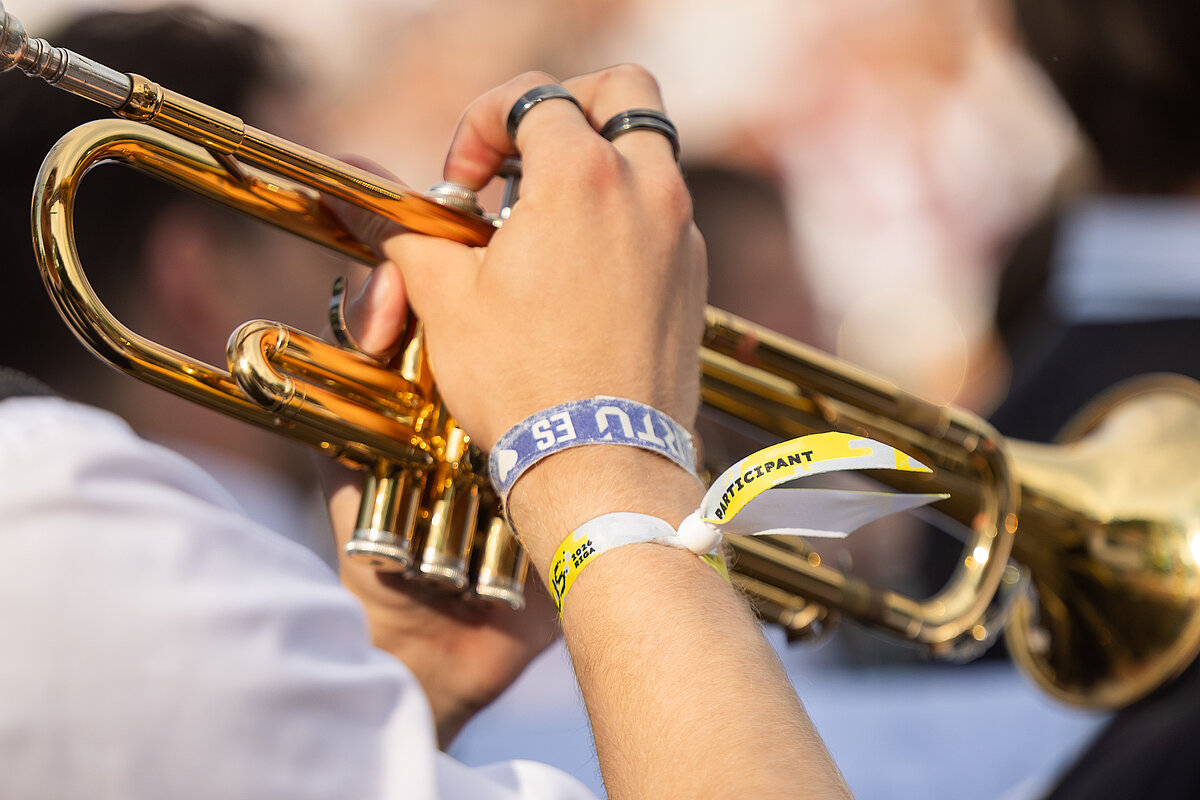
At 11 AM, in Vērmane Garden, the wind orchestra concert began with a program featuring Lithuanian wind orchestras. This was followed at 1:00 p.m. by a program featuring Latvian wind orchestras and at 2:30 p.m. by a program featuring Estonian wind orchestras.
Photo gallery from the Wind Orchestra Concert.
At 6.30 PM, the Lithuanian folk music concert “Baltic Songs” invited the audience to discover Lithuania’s musical heritage. The concert combined singing, folk music, and dance to create a contemporary theatrical narrative while preserving the spirit of tradition. More than 230 Lithuanian student artists participated in the concert, using traditional Lithuanian folk instruments to showcase the richness and unity of Baltic culture. Artistic Director of the concert: Jolanta Kisielytė-Sadauskienė.
Photo gallery from the Lithuanian Folk Music Concert.
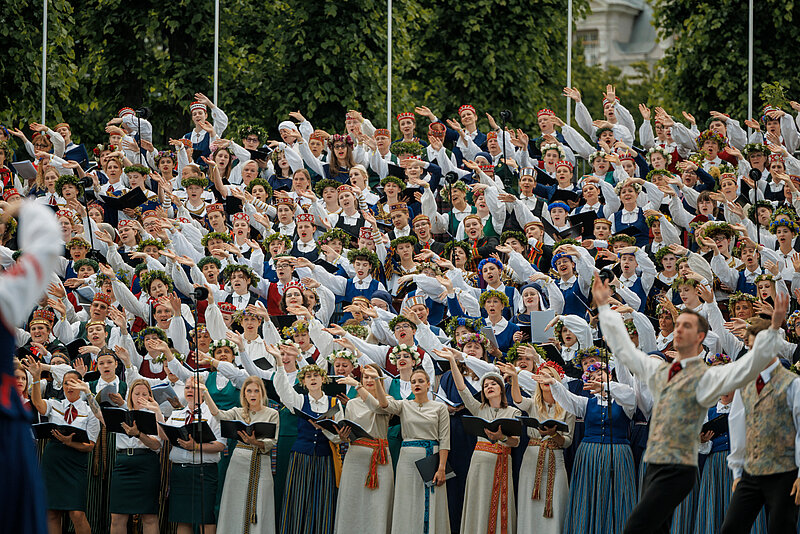
At the end of the evening, at 8 PM, a concert of sacred music took place at Riga Cathedral, inviting the audience to experience the voices of Baltic student choirs in a unique musical and spiritual performance. The human journey from ignorance and darkness to enlightenment and understanding, depicting the search for self, life’s challenges, and spiritual elevation.
For the concert, each participating country selected its own program of sacred music featuring national composers. Alongside the sacred music programs performed by choirs from Estonia, Lithuania, and Latvia, the mighty organ of the Dome Cathedral was played by organist Aigars Reinis. The concert’s artistic director was Edgars Vītols.

About the Festival
The “Gaudeamus" tradition began in 1956 in Tartu, and since then the festival has been held 19 times across the Baltic States. It is an important part of Baltic cultural and academic identity, promoting the preservation of traditions and encouraging young people’s participation in folk culture.
The festival plays a significant role in safeguarding the unique Song and Dance Festival tradition and strengthening unity among the Baltic States. The event is held alternately in each of the Baltic countries.
The festival is organised by the Ministry of Education and Science of Latvia in cooperation with the University of Latvia and the Riga City Municipality.